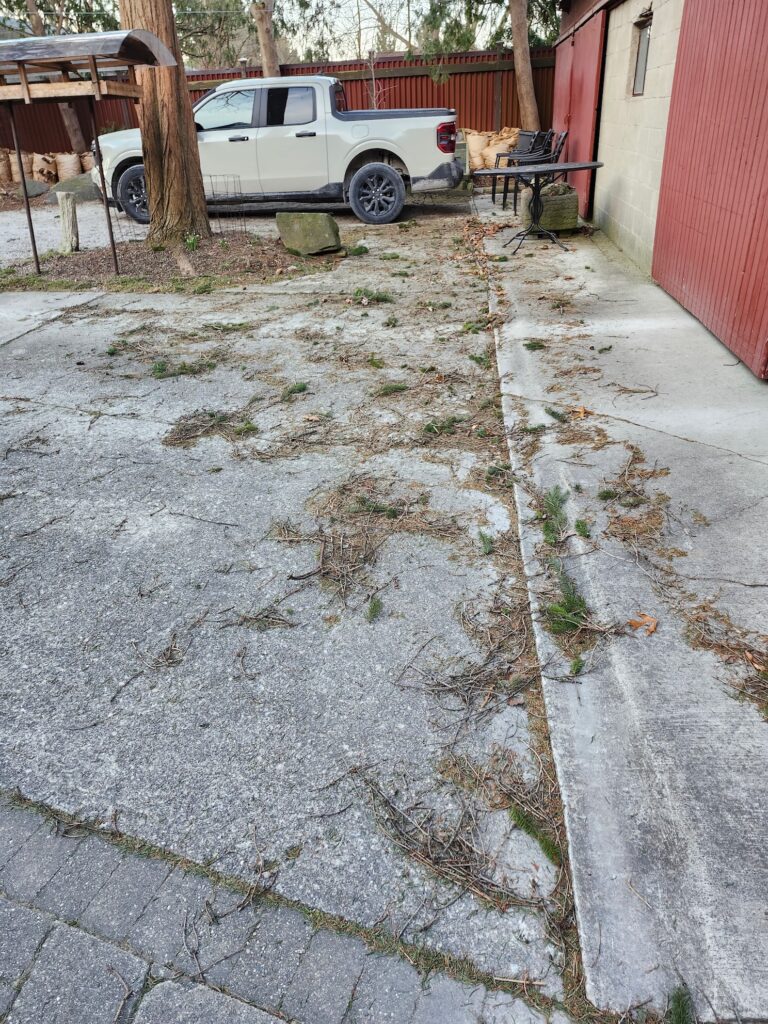
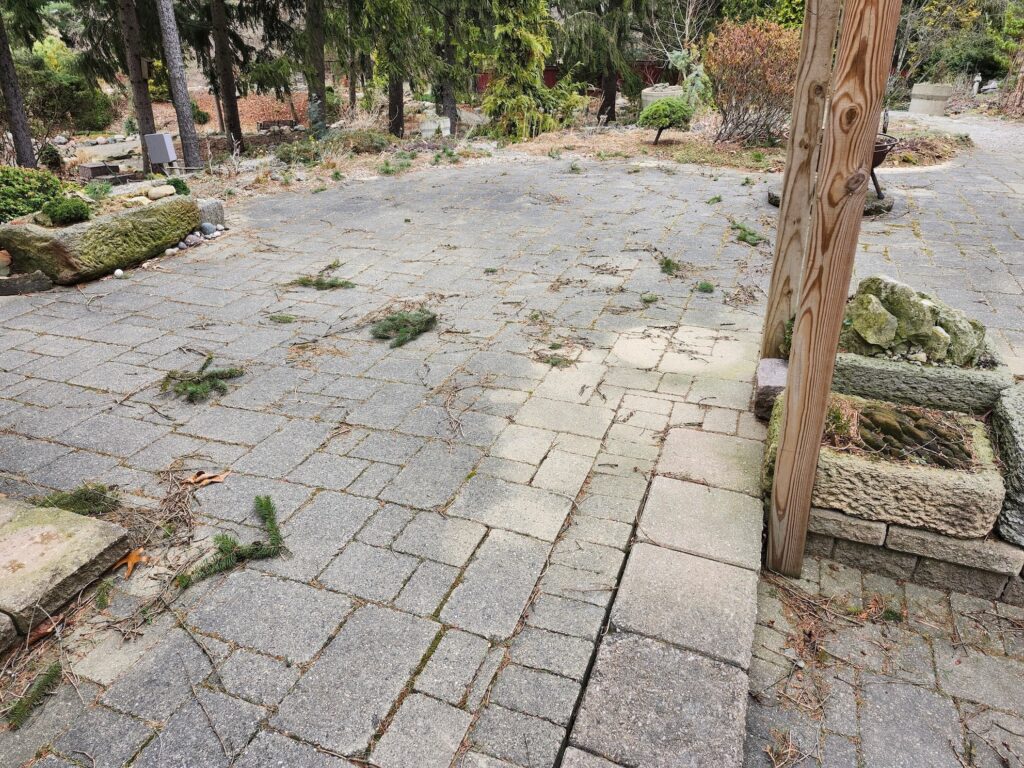
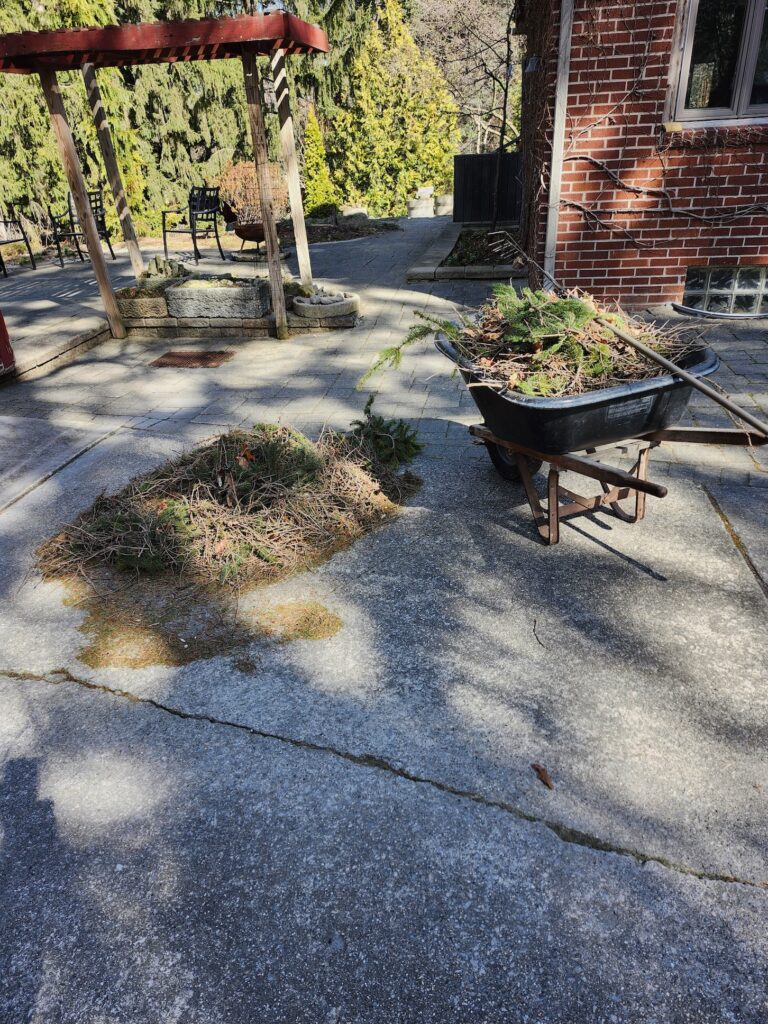
A good bit of the Midwest was subjected to high winds this past Friday, March13th. Fortunately, there was very little damage to my garden other than a lot of twigs and small branches littering the ground.
In just a couple of hours ( using my leaf blower, wheelbarrow/ and leaf-rake ) I had all of the paved areas and gravel pathways pretty much in order.
Removing all of the same sort of debris, out of the rockeries, will be a different matter all to- gether. That’ll take days, as every trig, cone, and deciduous leaf will have to be picked out from the rocks, by hand!
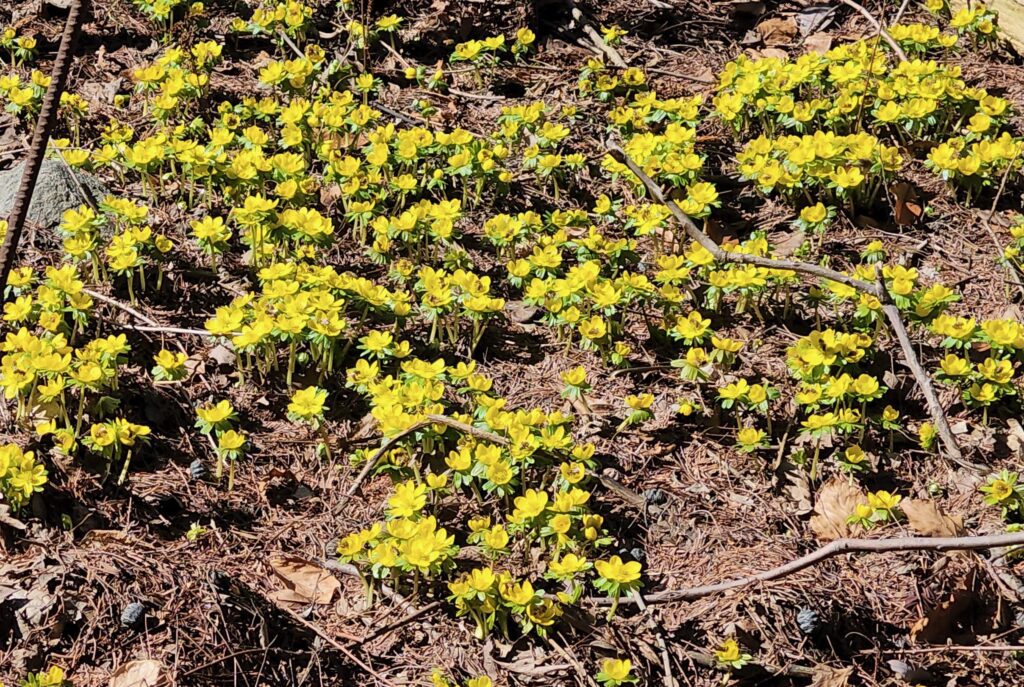
Despite the cooler temperatures, new flowers are opening and more plants are coming up.
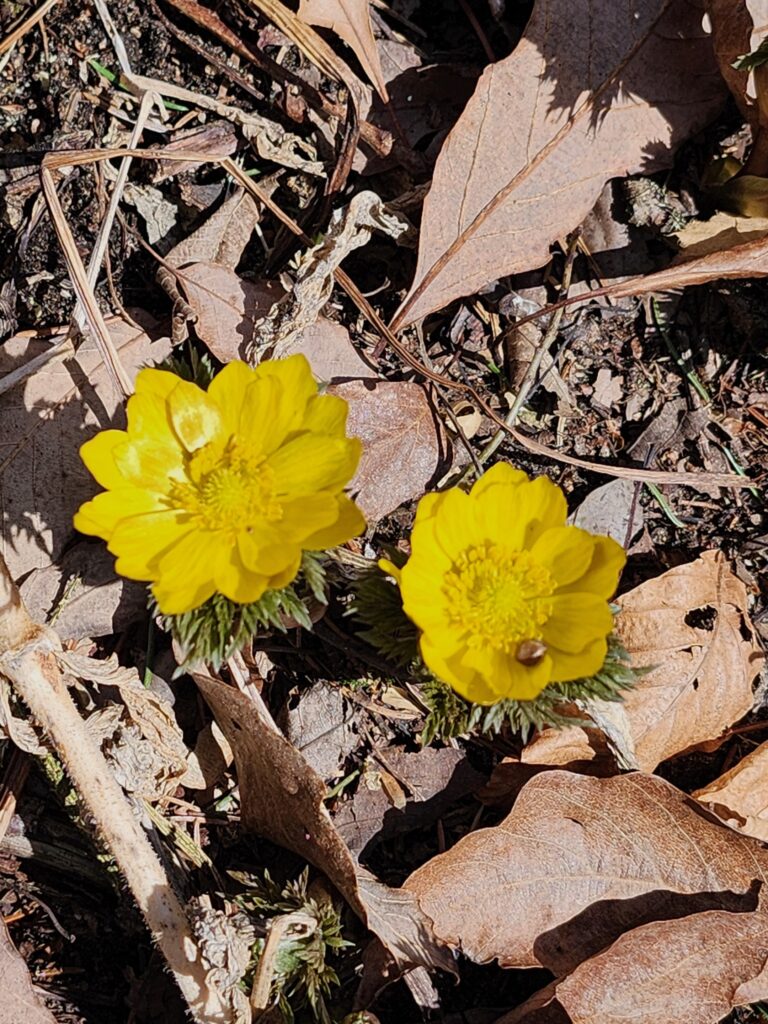
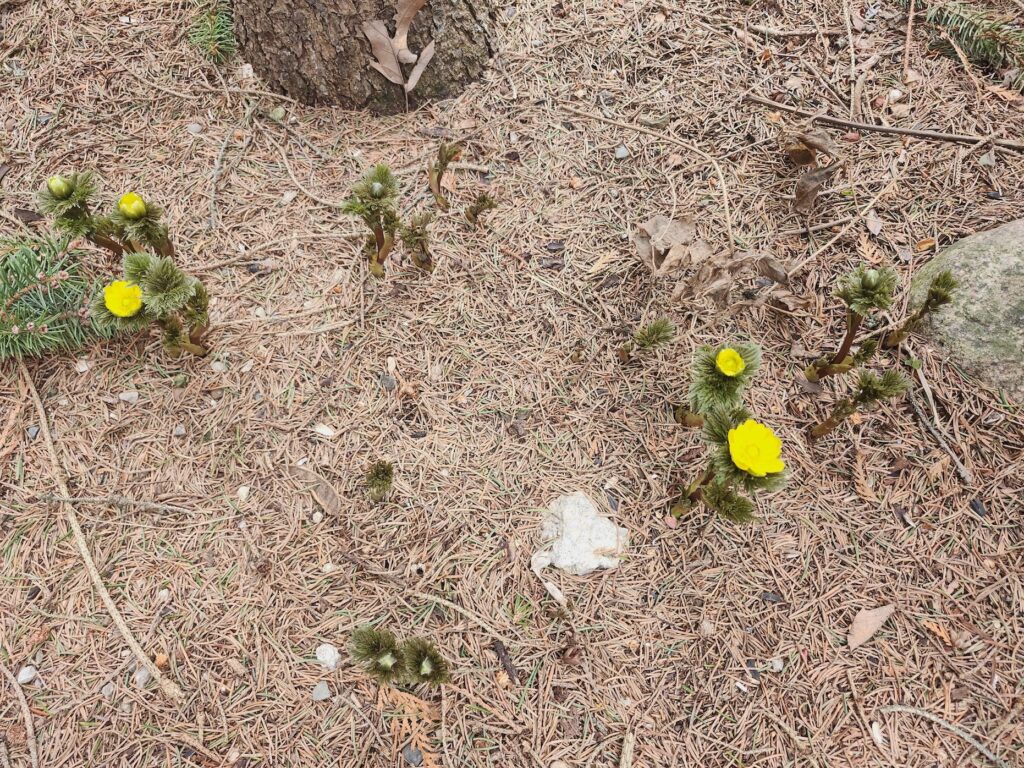
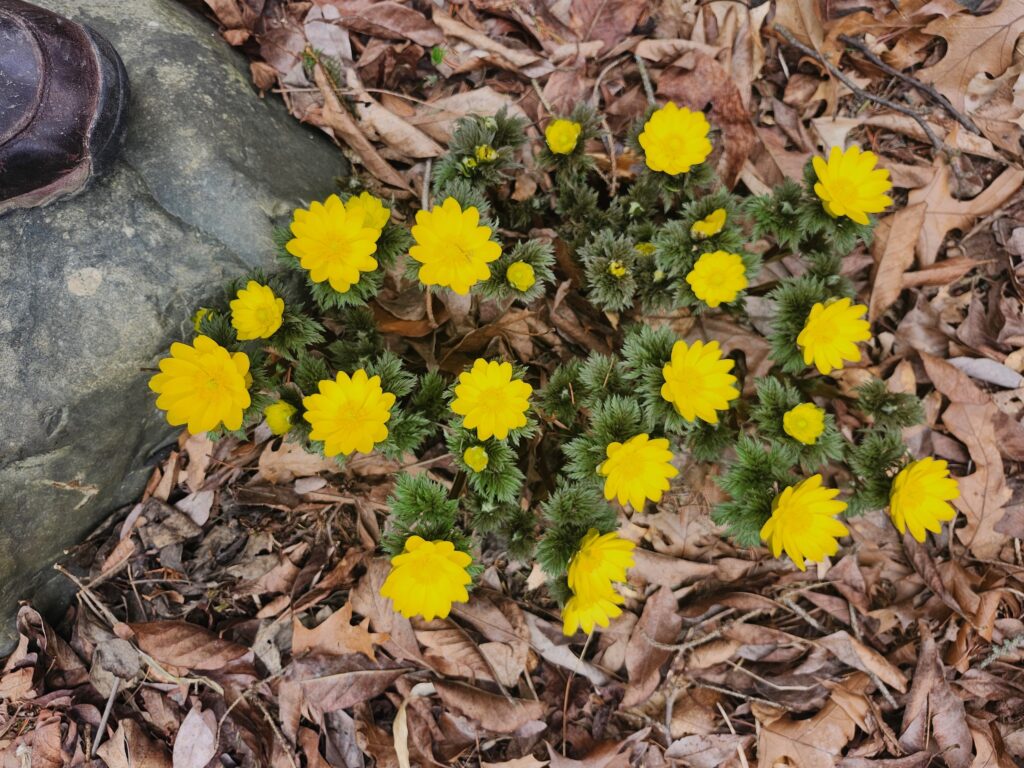
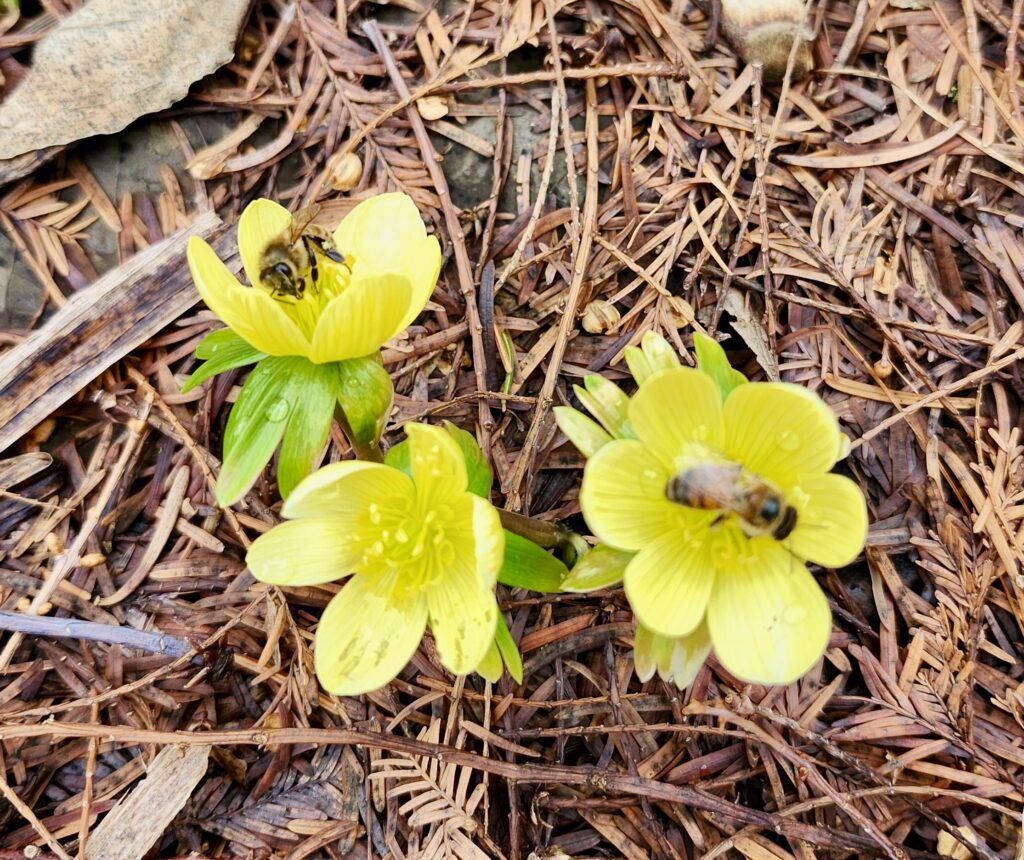
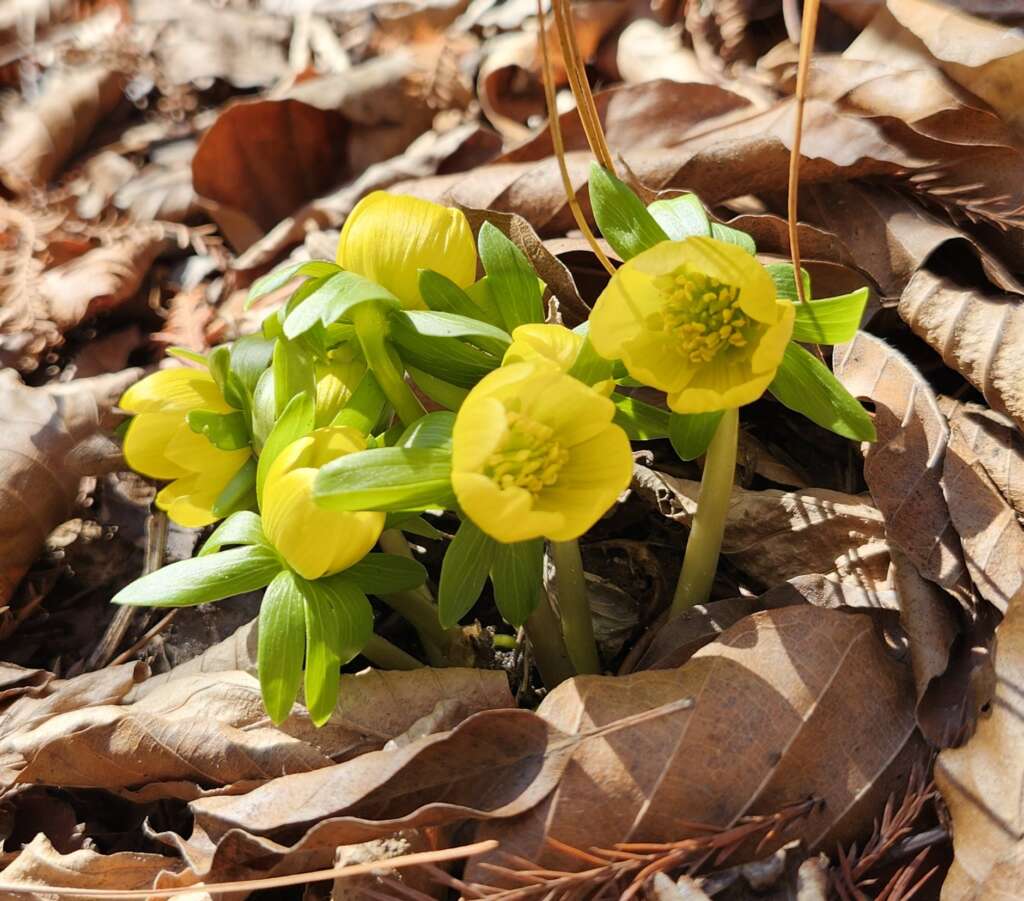
The first blooms of Adonis amurensis ( one of 3 plants purchased from White Flower Farm, seemingly a lifetime ago ) opened this morning.
The paucity of flowers on all 3 older clumps, cause’s me to think, its high time to lift each plant, divide these geriatric stems, work in some compost into their planting holes, and perhaps site a few elsewhere in the garden.
This younger addition to the garden, is far more presentable.
I had hopes for continued sunshine after lunch. That could urge still-closed blooms on a number of recently emerged plants to open. Alas, clouds have moved in, and non-sunny days are forecasted for the remainder of the weekend and on till mid week. Blustery, wintery mixed lows in the mid teens as well ! We’ll have to wait and see, what looks camera worthy when the sun returns.
Actually, there was little going Ion in the garden prior to Thursday’s rain. But since then, the rush of spring is certainly on here.
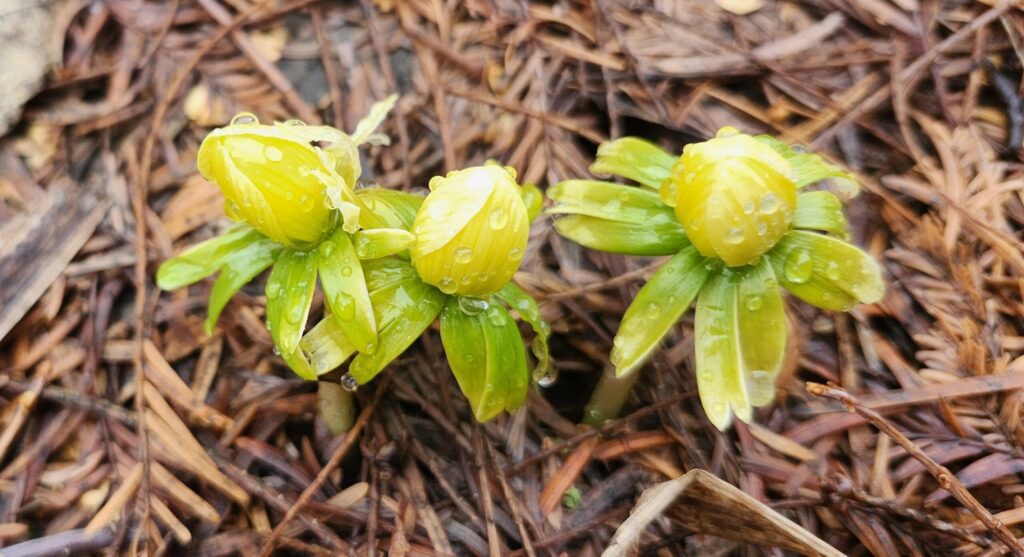
A paler yellow-form shown above yesterday, and once more a day later.
Mike’s honey bees are hard at work, should be another year of great seed set!
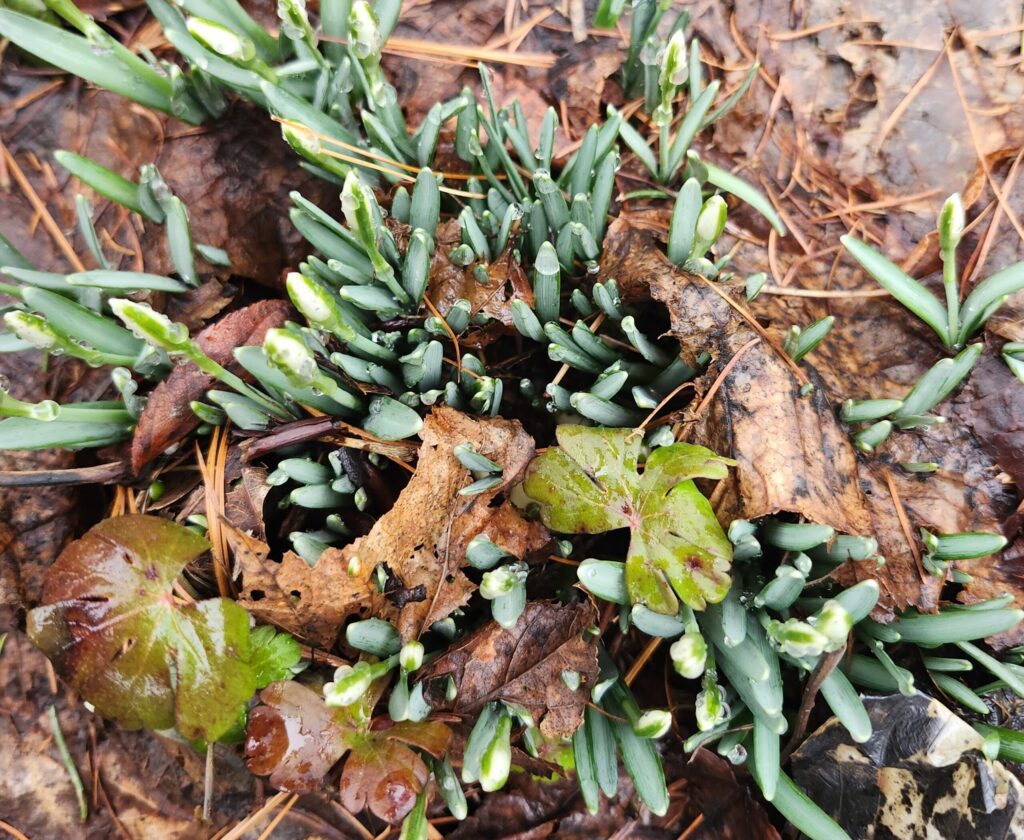
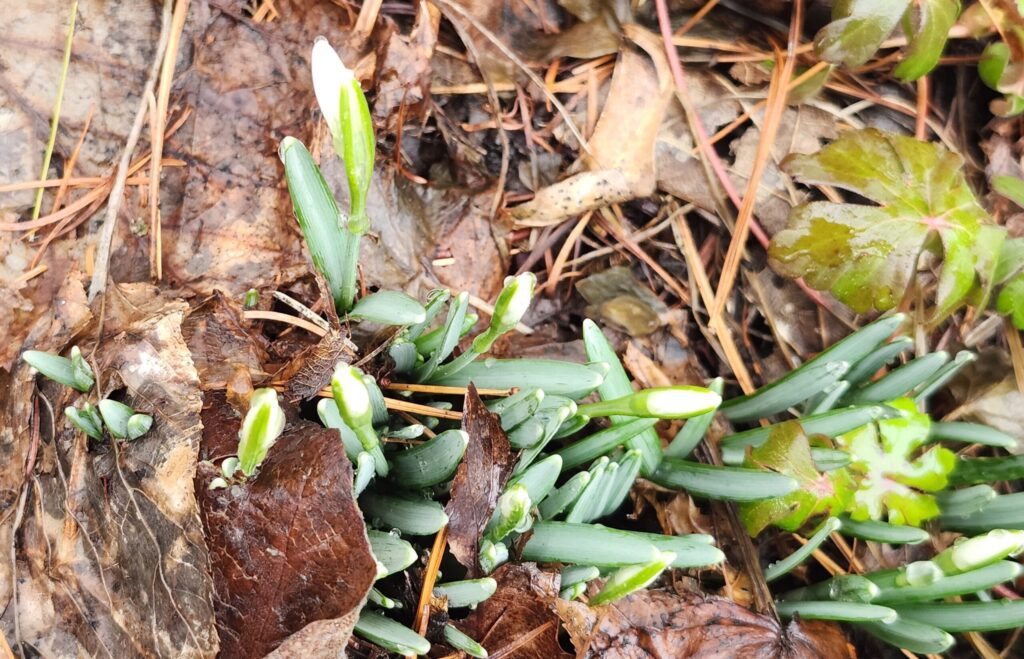
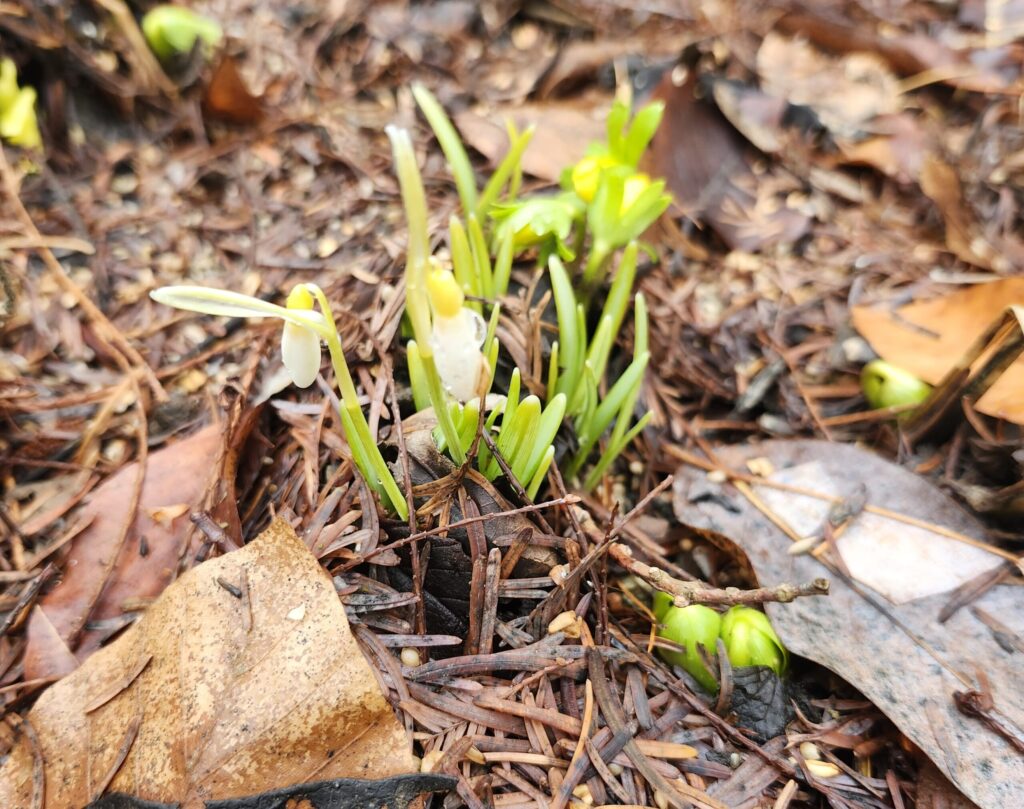
Galanthus nivalis are also appearing everywhere as well.
Including some with yellow ovaries ( below ).
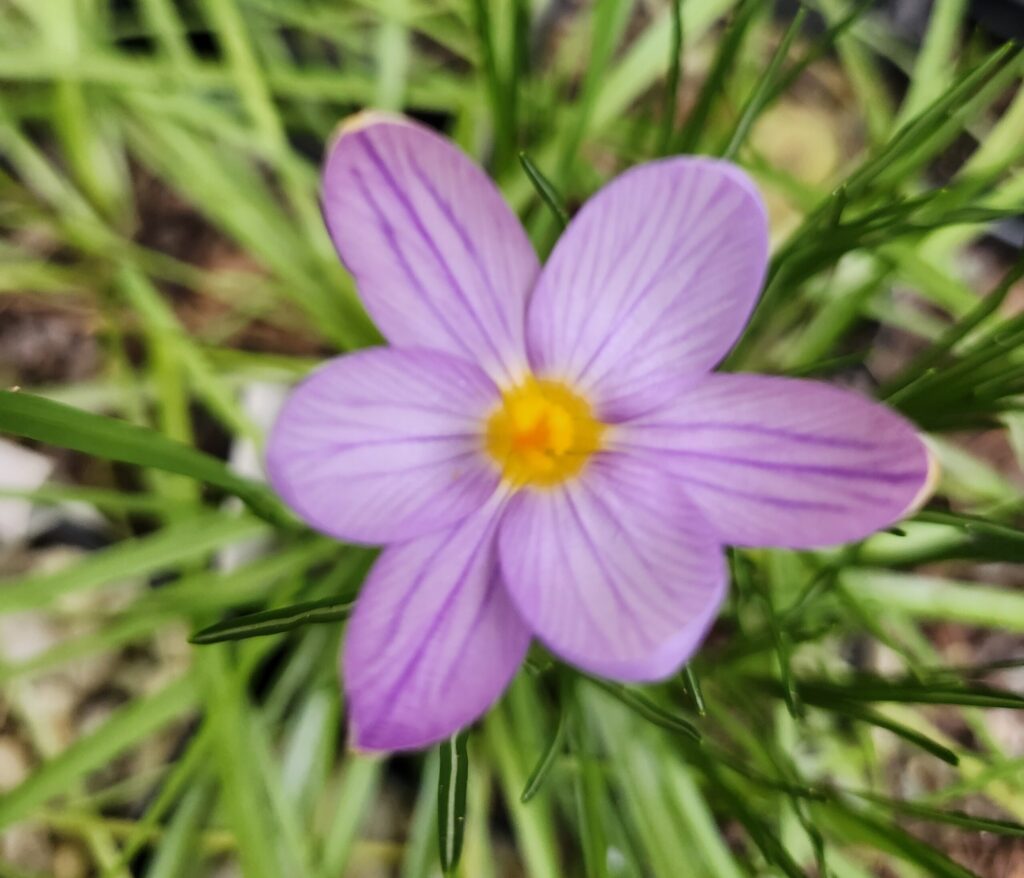
Went to close the Pit-House (forecasted to be in the low 30’s tonite) And spotted the first Crocus ‘De Jager’ in bloom.
There are a potfull of bulbs in this pot, originally a gift from Bill Brown.
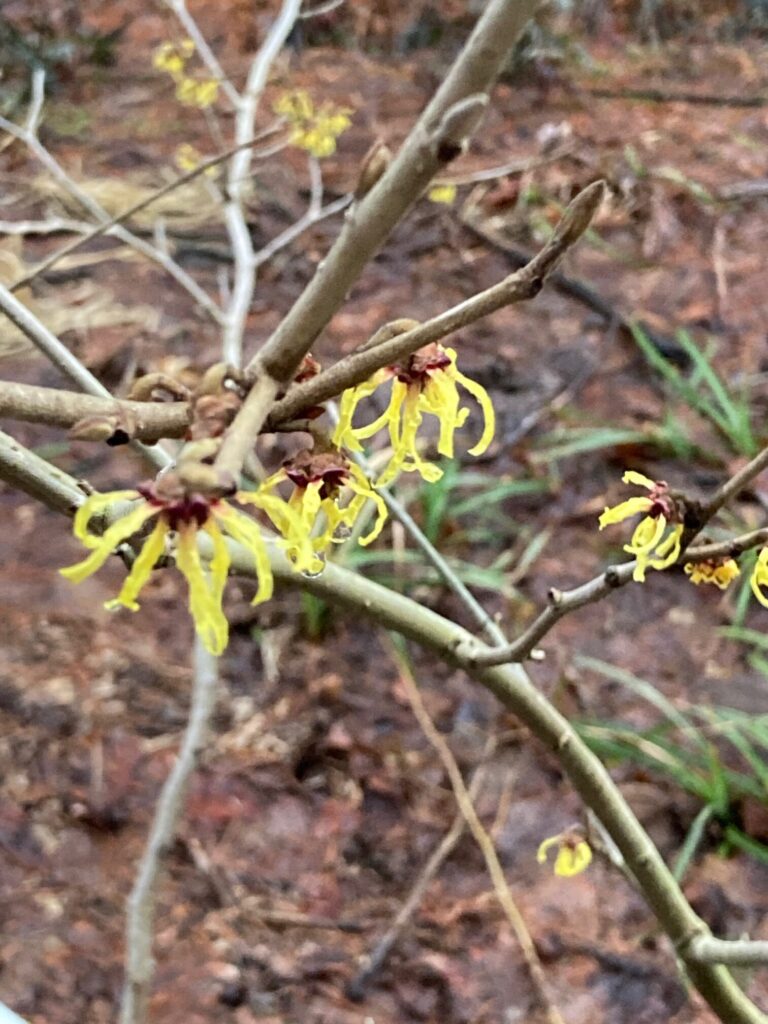
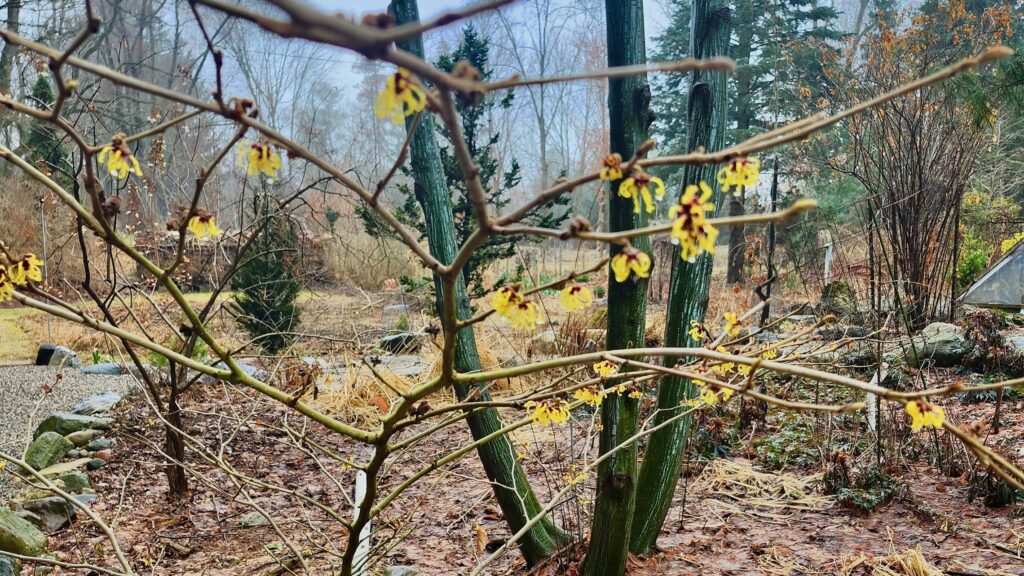
My Hamamelis ‘Pallida’ does not have a lot of blooms this year.
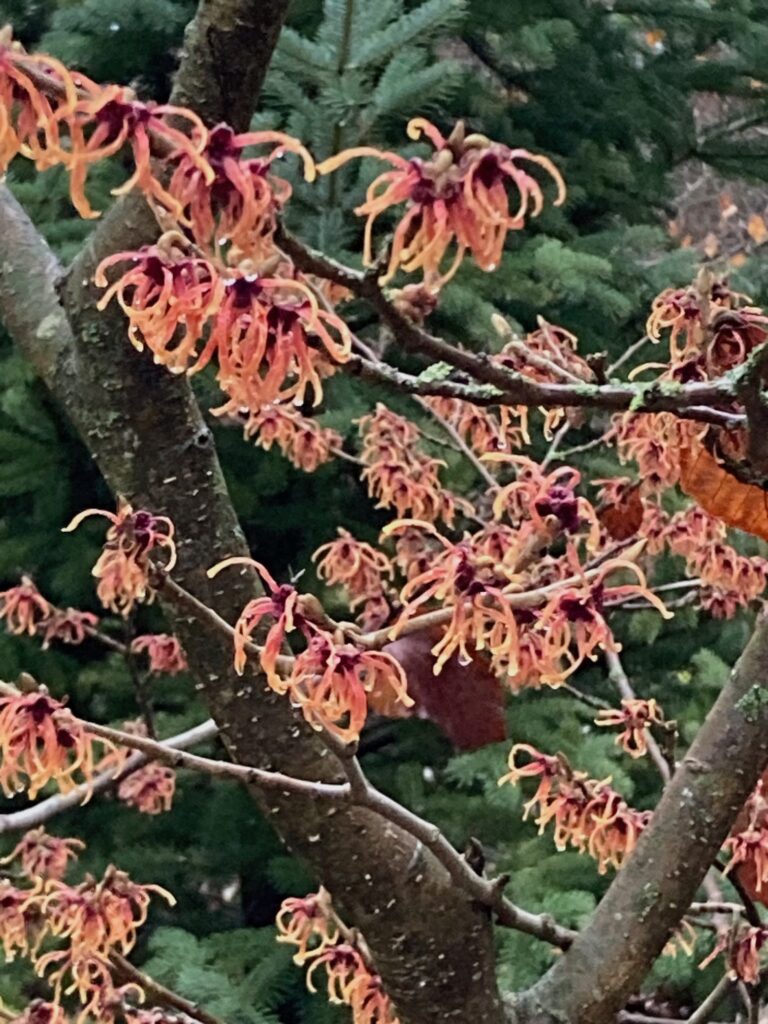
Not the case with H. ‘Jelena’
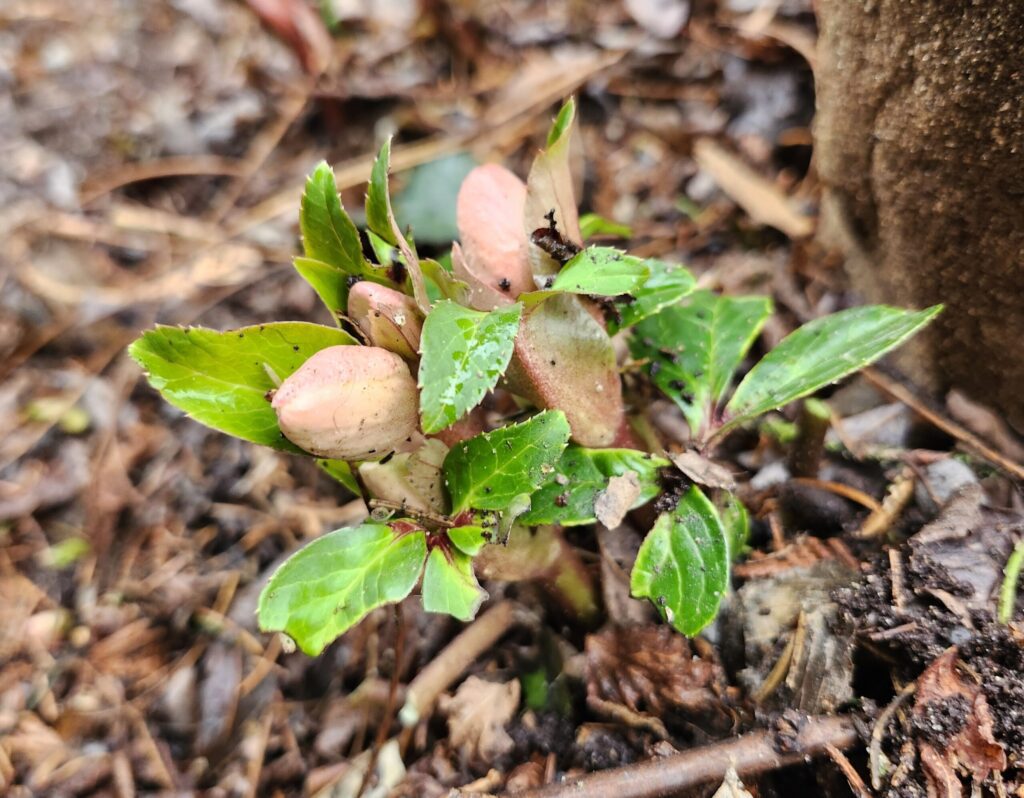
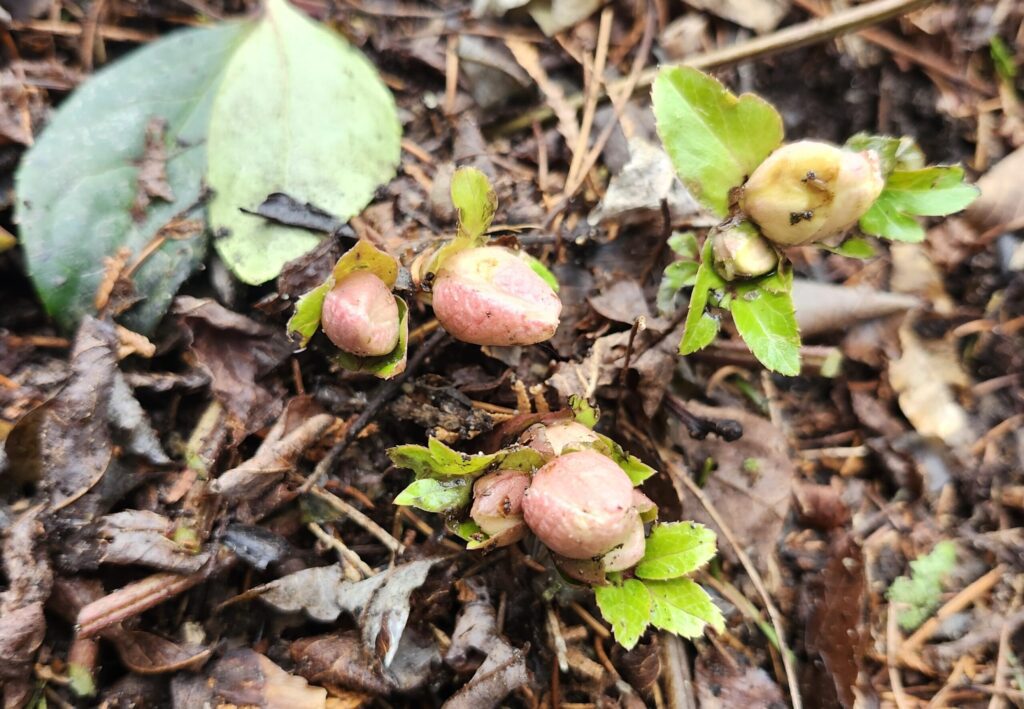
Spent about an hour outside yesterday removing old foliage from the hellebores before the rain chased me back indoors.
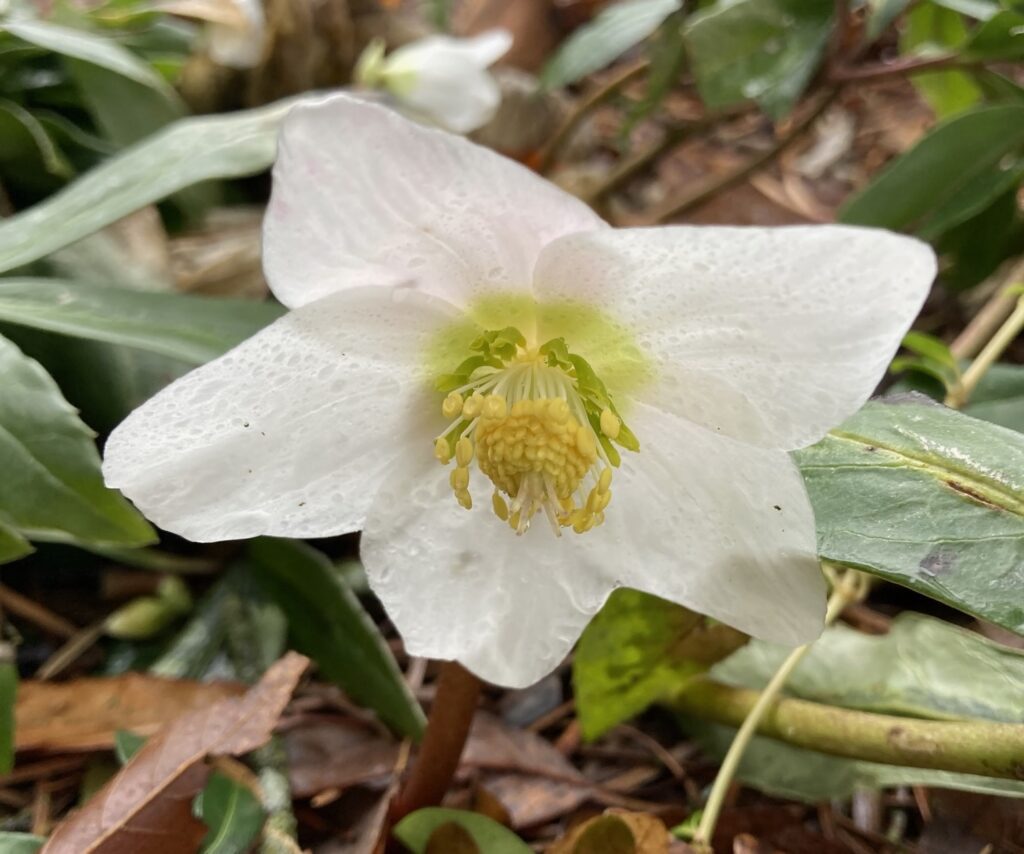
I believe this is Helleborus x Ballardeia ‘Pink Frost’ ( below). Pretty sure I purchased this from Plant Delights about a decade or more ago.
The clump got so big the center died out. I need to dig up several of these separated clumps and move them elsewhere in the garden.
Here’s what ‘Potters Wheel looks like in the bed across the driveway.
But down in the lower garden, out in more sun, they are in bloom!
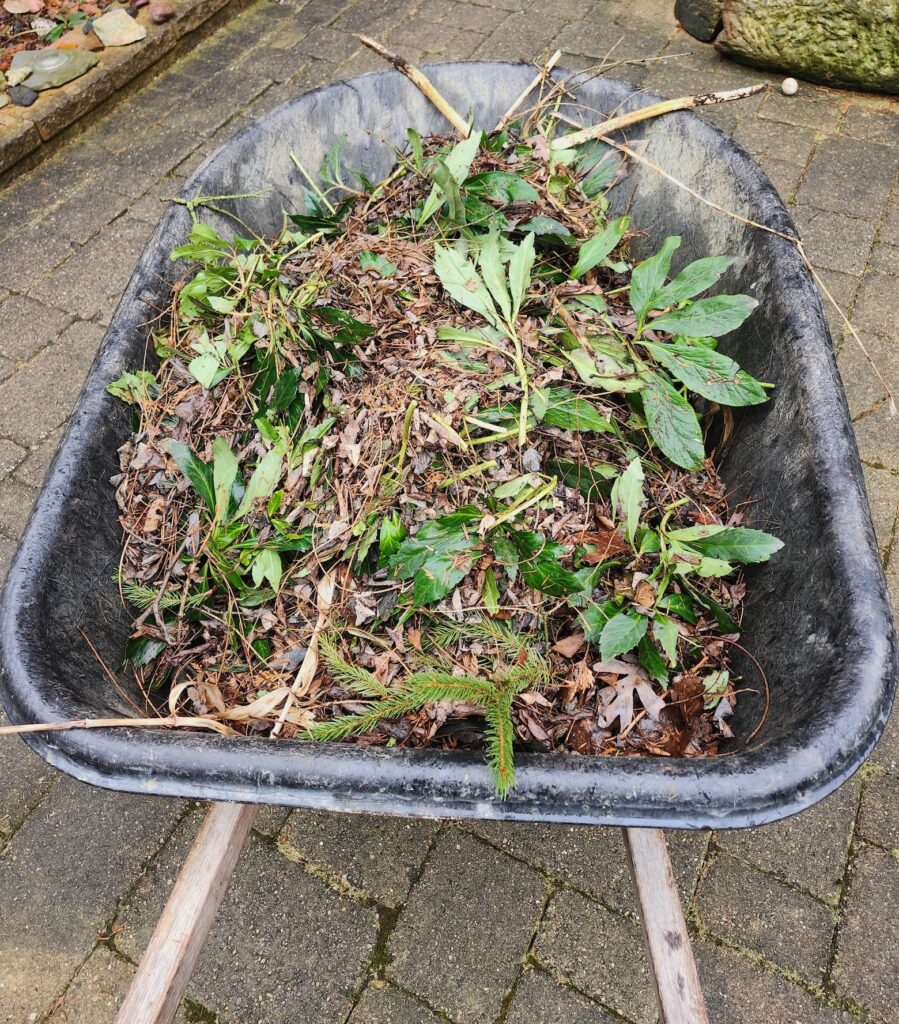
So with all the flowers quickly pushing, it’s high time to get busy deadheading old foliage. This small load, was about an hour’s worth of work on Thursday, the rain put an end to working outside.
This morning Andrea & I took Verlie for a walk down the road and back.
Upon arriving back home I went down to open up the Pit-House, and check the rain gage 1.7” since Thursday. A pretty good start.
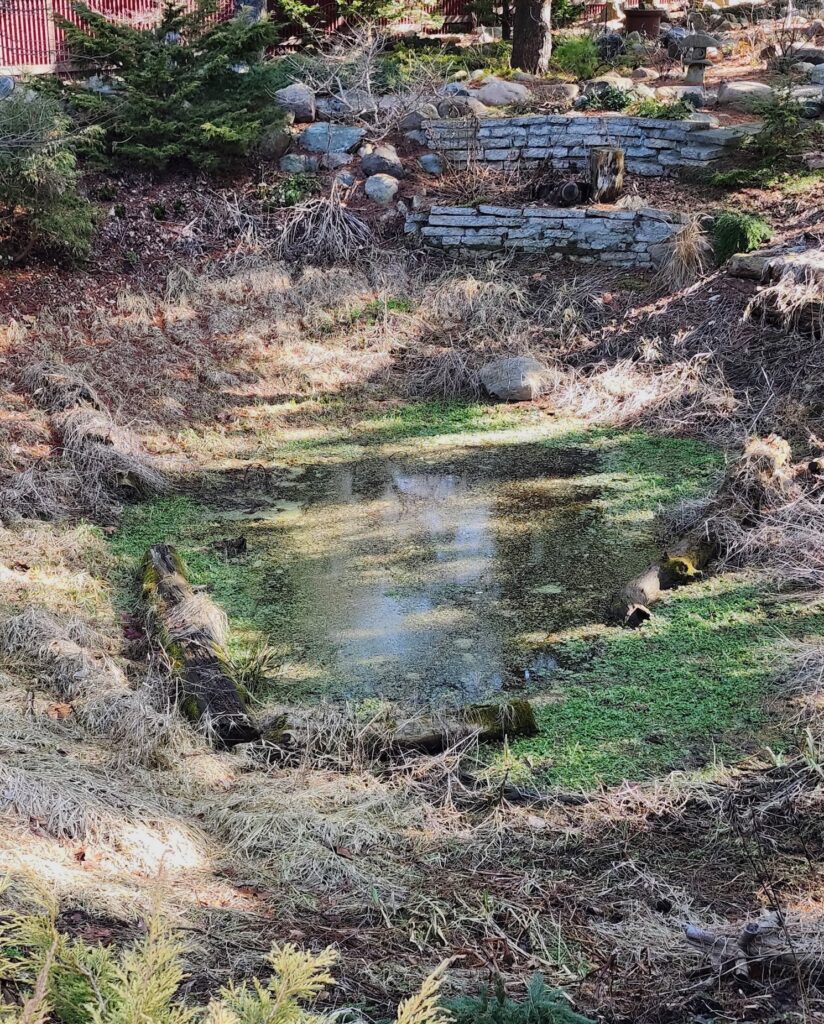
That rainfall increased the water table of the ground water by about 3″, so now there’s a wee puddle in the bottom of the pond.
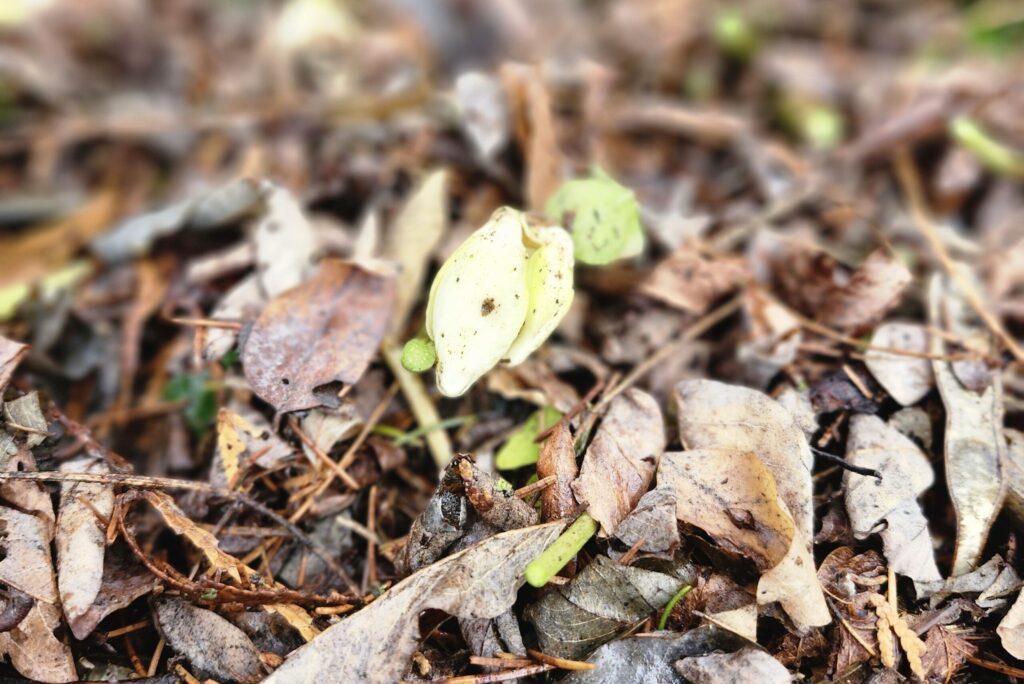
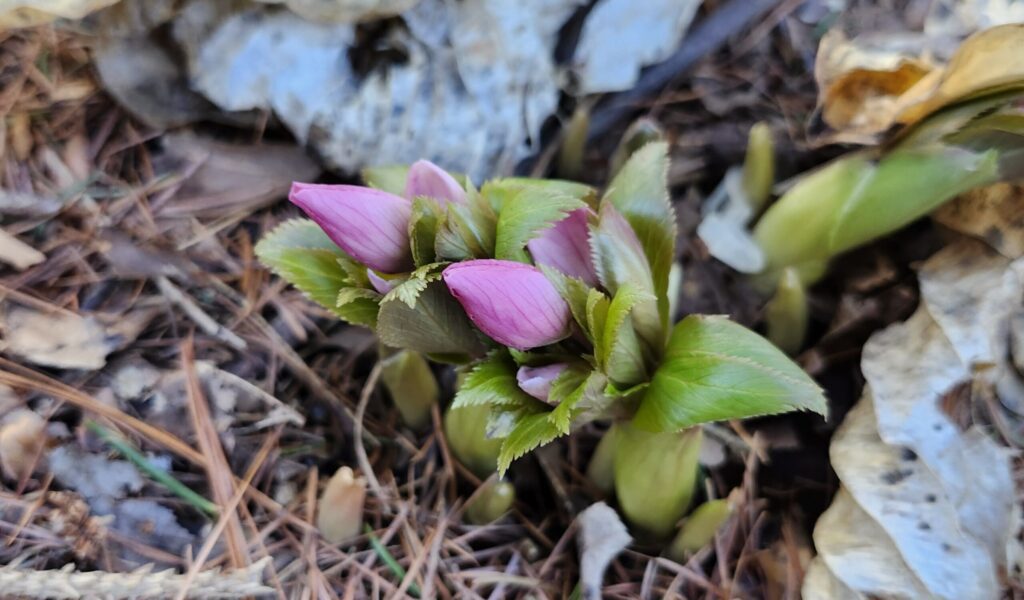
On the way back to the house, I happened to spot one of several Helleborus tibetanus in the garden. With the forecasted weather for today and tomorrow, I’ve little doubt it’ll be in bloom shortly!
During the business meeting at the GLC’s annual January Pot Luck Meeting, one of the topics for discussion, was the GLC’s web site. I posed the question to the membership “How many of you are interested in, or care about the GLC’s web site”? Of the 30 some in attendance, 4 hands were raised, mine was not one of those in the affirmative.
The future of the GLC’s website was one of two main topics discussed, at the recent meeting of the Board held via Zoom earlier this week ( once again my apologies to Lisa, for my omitting her from the notice )! The first item on the agenda was discussion and approval of the GLC’s acceptance of Joyce Fingerut’s request to handle the distribution of the NARGS Seed Ex.’s Surplus Seed Round, for the years of 2028 & 2029.
This web site is to continue as is, for the time being, while other possible options are explored. The request for more submittals to this blog was made to the membership, so once more I will be putting together material for this Blog, and I hope more of the GLC membership will make the effort to do so as well.
Since last we connected…
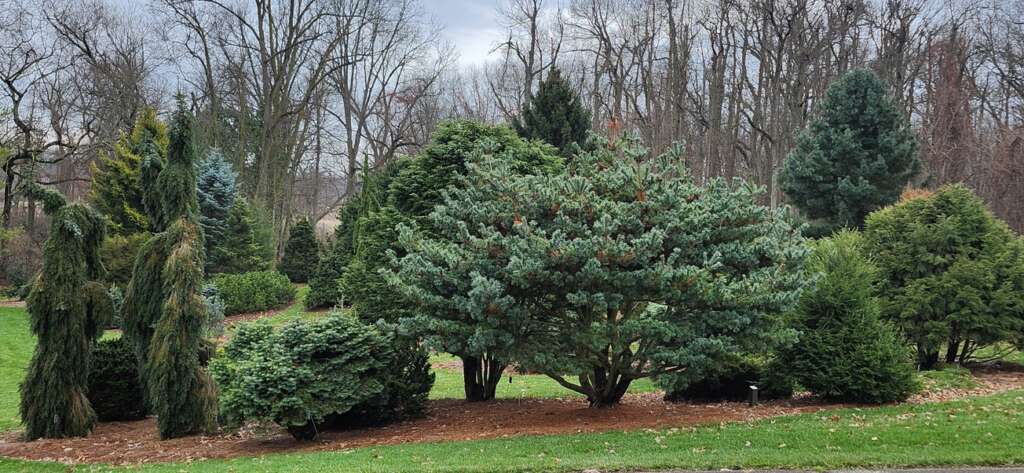
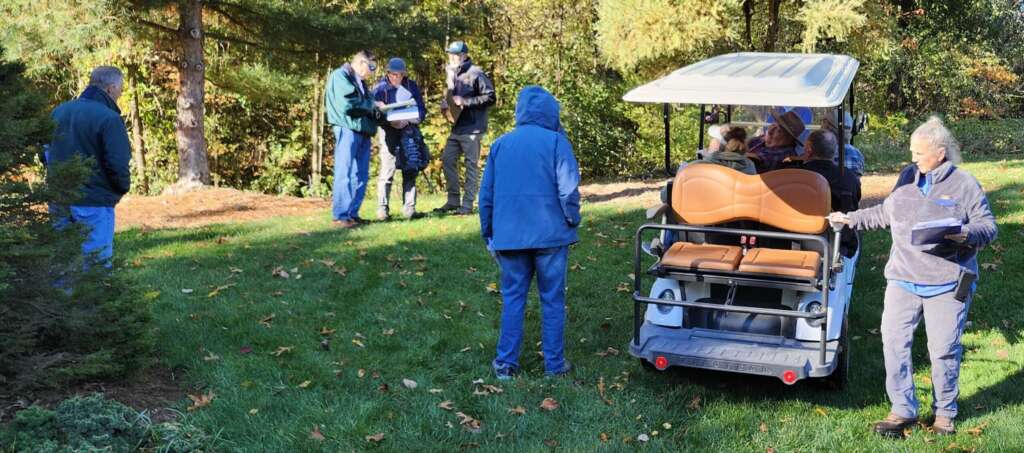
One area of gardening-interest which has occupied my time, has been volunteering at the Hidden Lakes Botanical Gardens ( in Tipton MI ) working with a small but dedicated group, working in the Conifer Collection for the past 3 + years.
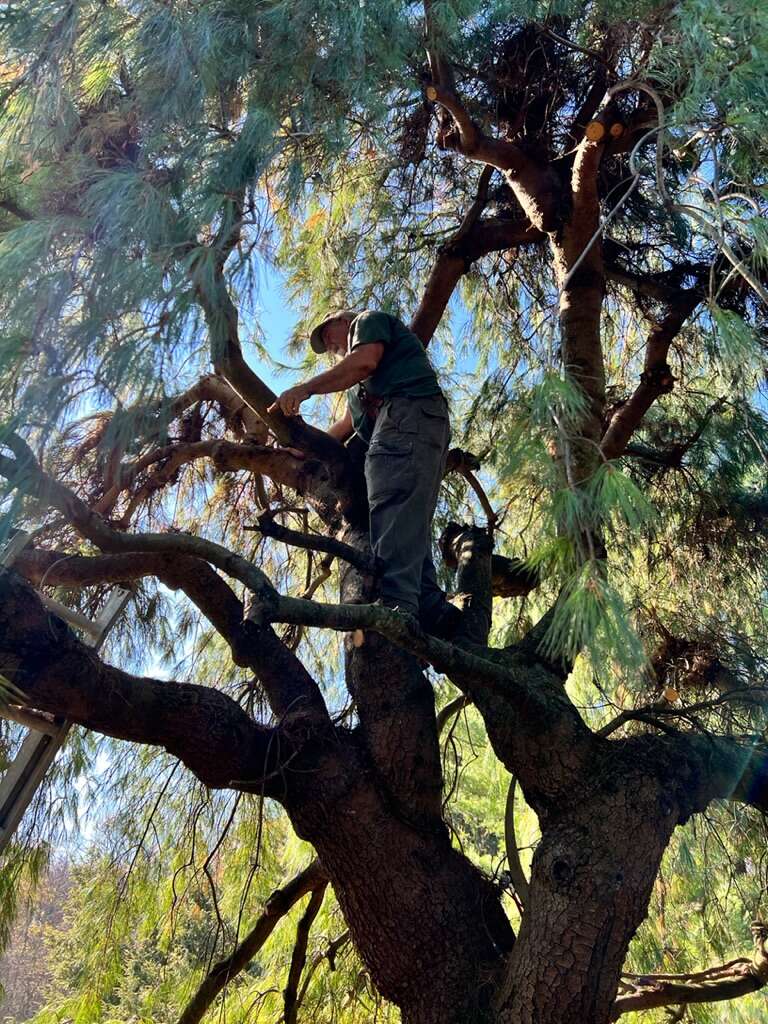
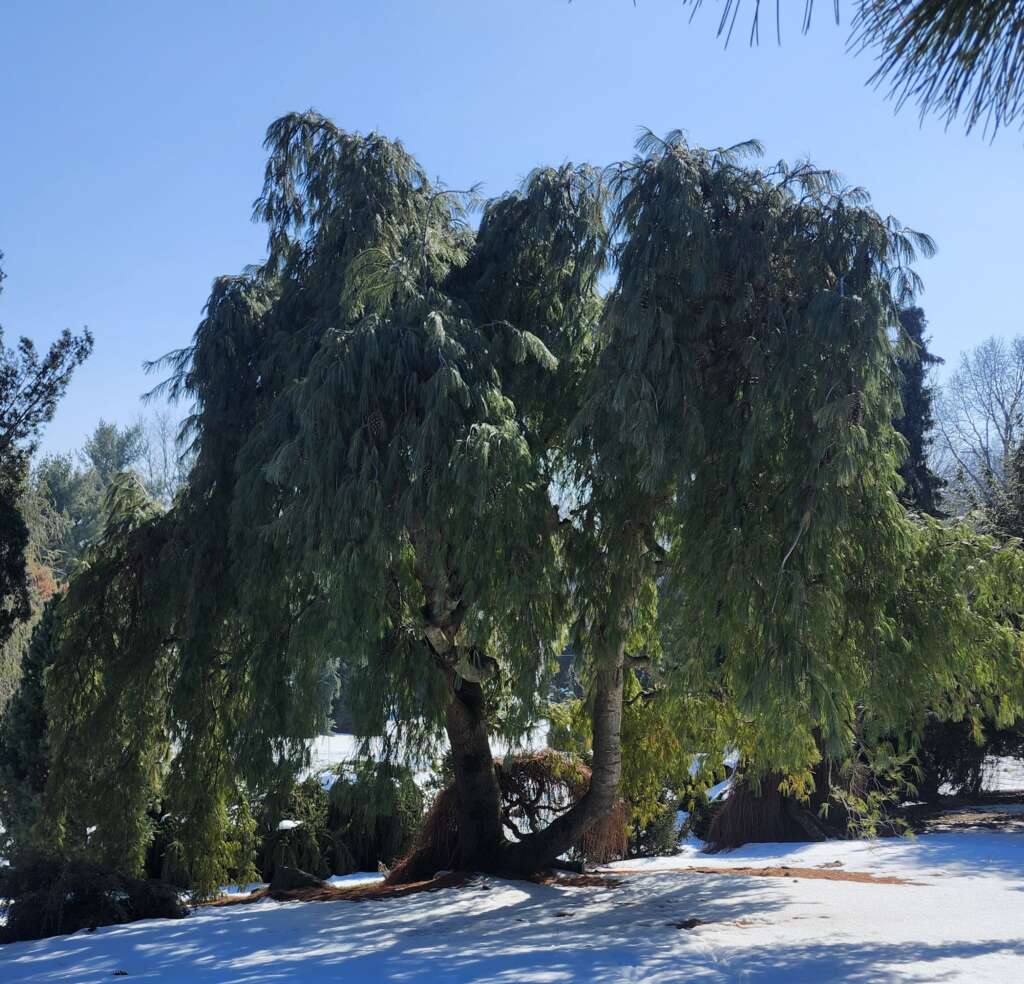
Working without shoes high up in this enormous weeping white pine, so as not to damage this thin barked tree.
In addition to pruning, the Wednesday Workgroup’s duties also include weeding, re-edging and mulching the beds.
Pruning out crossing branches, dead, damaged, and diseased wood, in addition opening up space within the tree canopies, to allow for better air circulation and sunlight to the trees interiors.
In short we strive to make each specimen as healthy and presentable as we can.
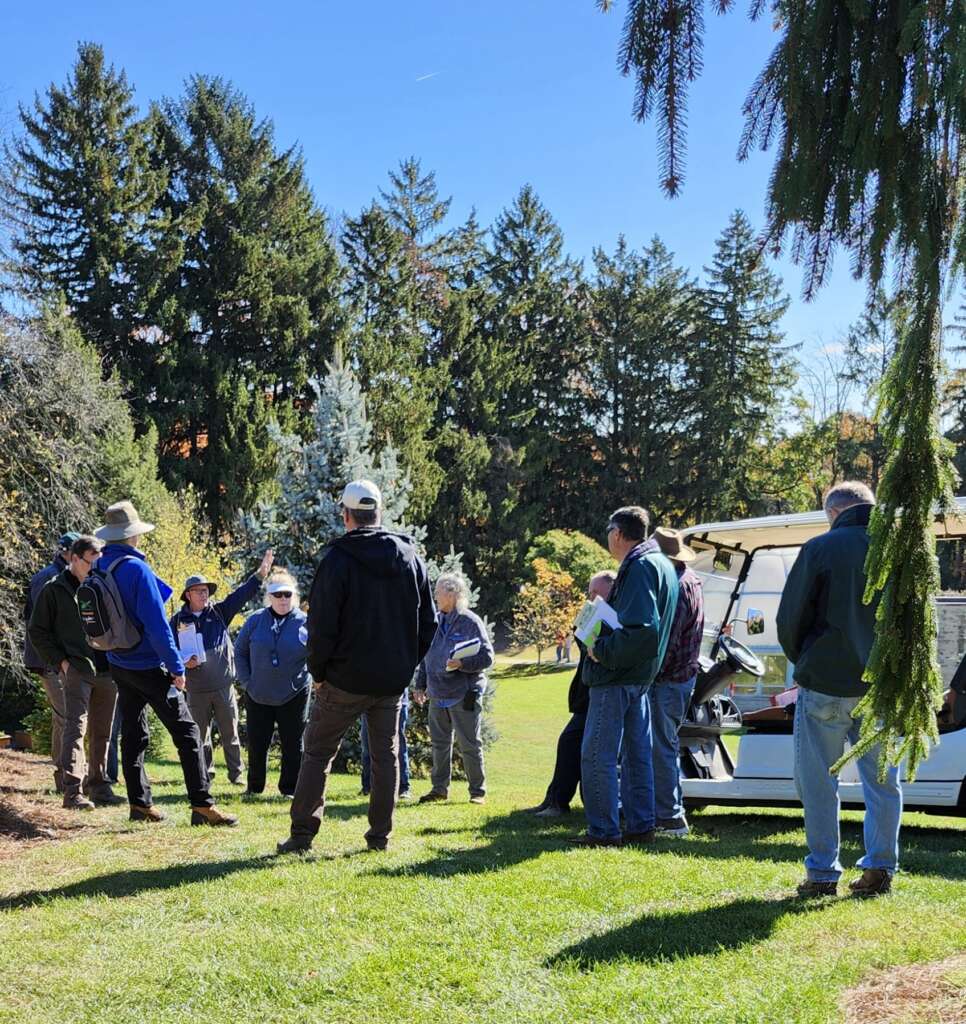
Twice annually, the HLG staff is joined by a dedicated and knowledgeable group of volunteers ( many traveling from great distances ) who serve as an advisory board for the Collection. Together this diverse group tour the entire Harper Collection.
Bed by bed, every conifer is evaluated to determine if it remains worthy to maintain its place within the collection, in addition to nominate new cultivars worthy on adding to the collection.
I’ve found my participation with the Wednesday Workgroup to be educational and satisfying. Not only has understanding of how, and where to prune increased tremendously, so too has my confidence to make those choices in pruning.
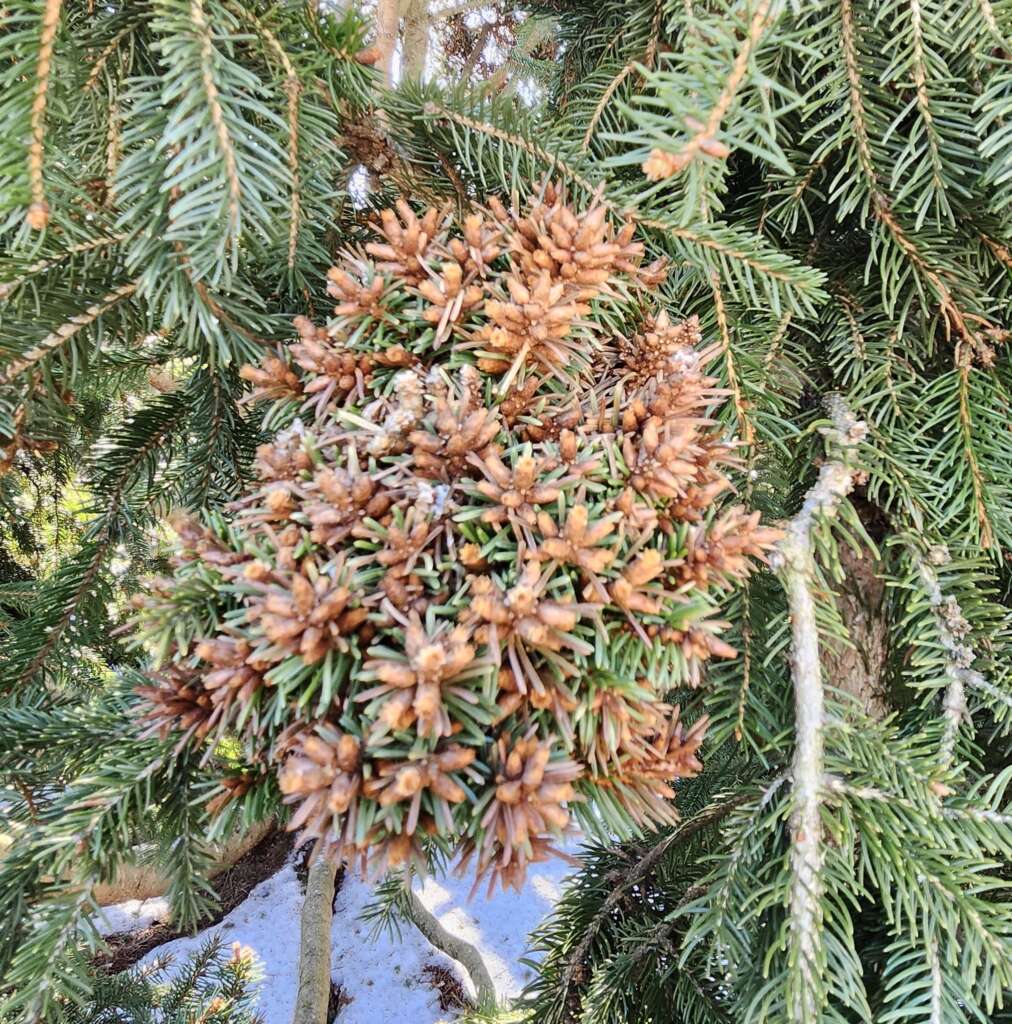
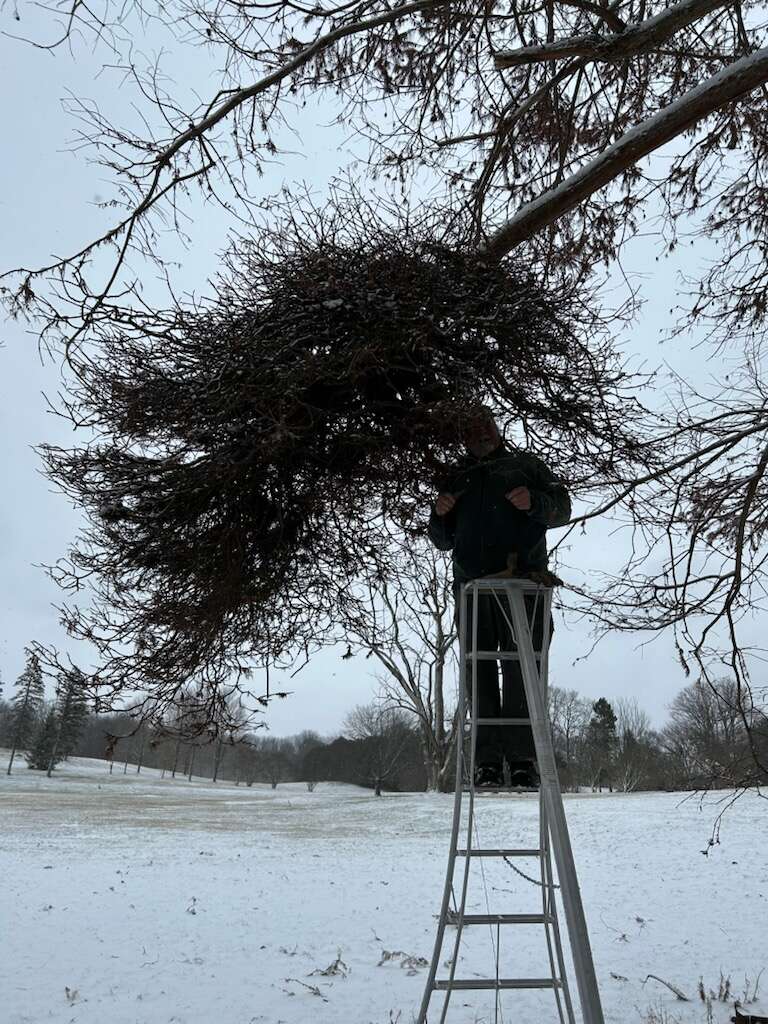
On occasion, surprises do arise. such as this witches broom found on a Norway Spruce.
Actually there have been a number of these witches brooms, that have been found growing at Hidden Lake Gardens, three of which have made their way into the Nursery trade.One growing on Abies Concolor near the Hosta Collection ( A. c. ‘Hosta La Vista ), another even tighter growing broom found years later, growing on the original ‘Hosta La Vista’ ( A. c. ‘Hosta
This large broom, noticed by Gary Gee who named it T. d. ‘Gee Whiz, ( along with the 2 previously mention Abies concolor broom’s ) are all on trees, not growing within the Harper Collection.
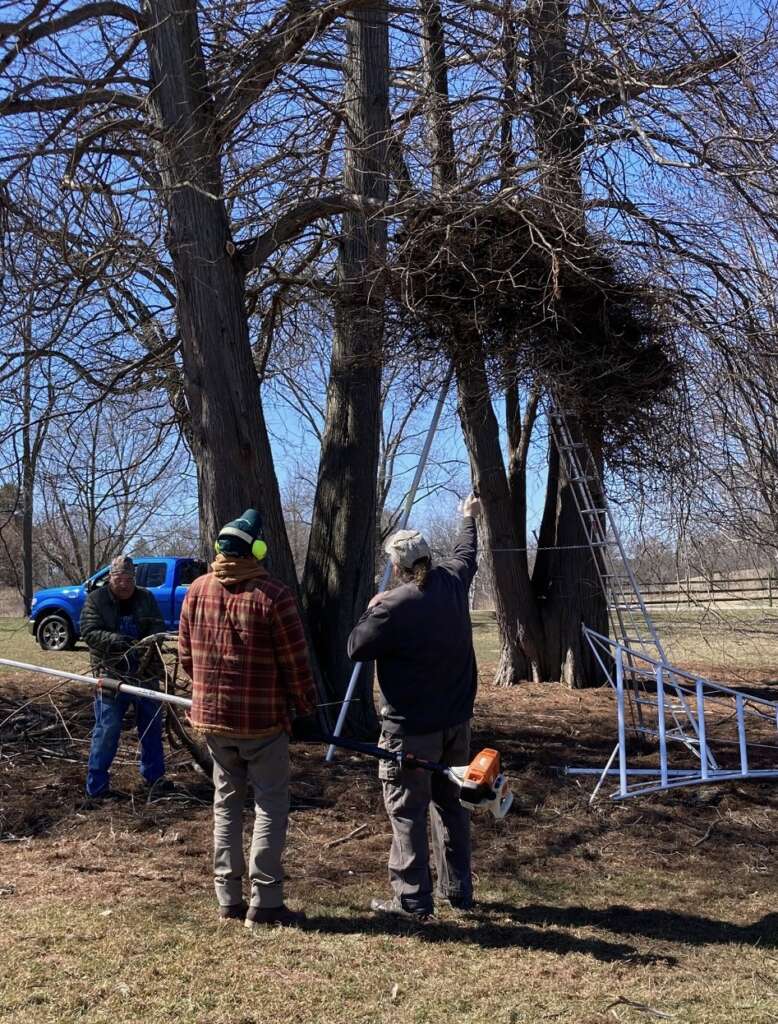
Almost a year ago in late march, our group set to removing as much built up debris as we could from the interior of this broom.
We had also removed several branches growing above the broom in order to allow more sunlight to reach the broom.
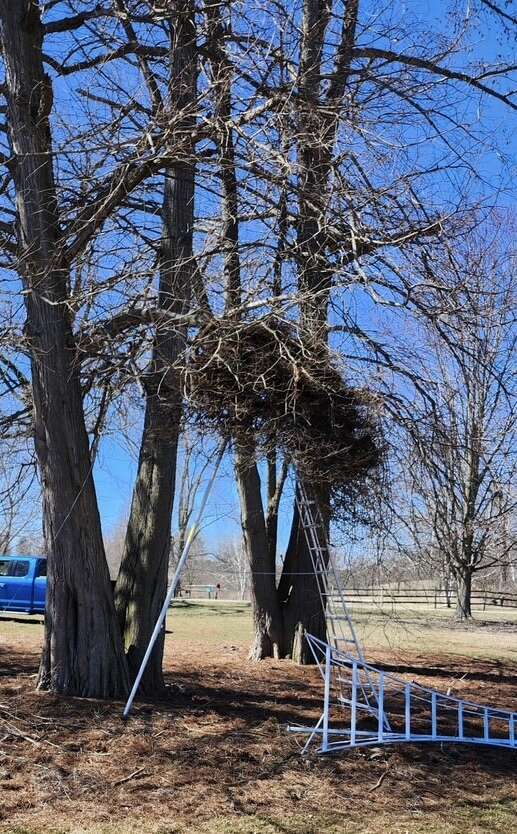
This work was in preparation of the installation of a supporting prop that would be installed beneath the broom, to prevent it being broken off by excessive ice or snow loadings, a common fate of large witches broom’s.
A month ago ( in late January ) Pat Karl & I joined Jon Genereau to install the long awaited support. But first several smaller branches from the broom had to be removed in order to make room for yoke at the top of the support to rest firmly beneath the main branch that the broom is growing from.
Here is a view of the support in place. We were all very happy to have this job done, especially with such cold and snowy conditions.
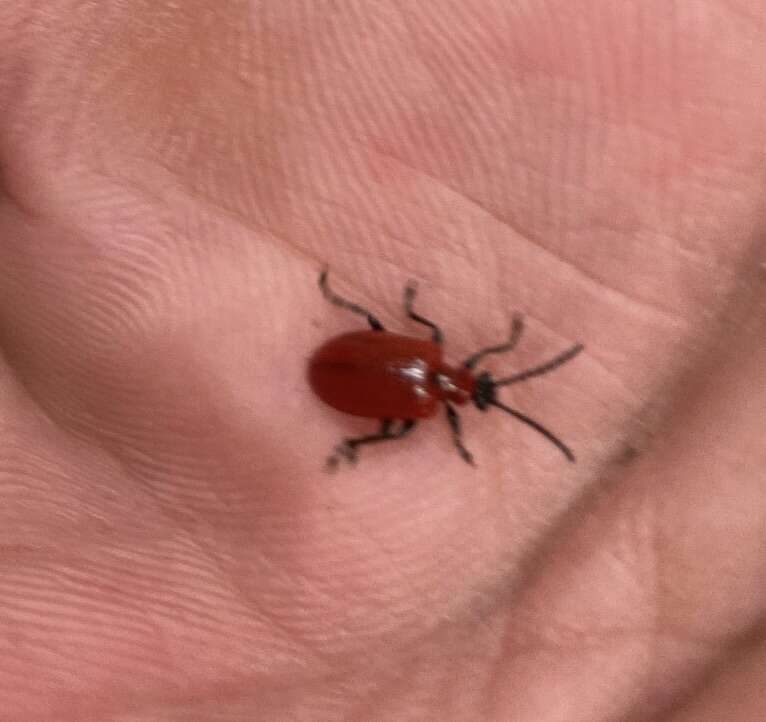
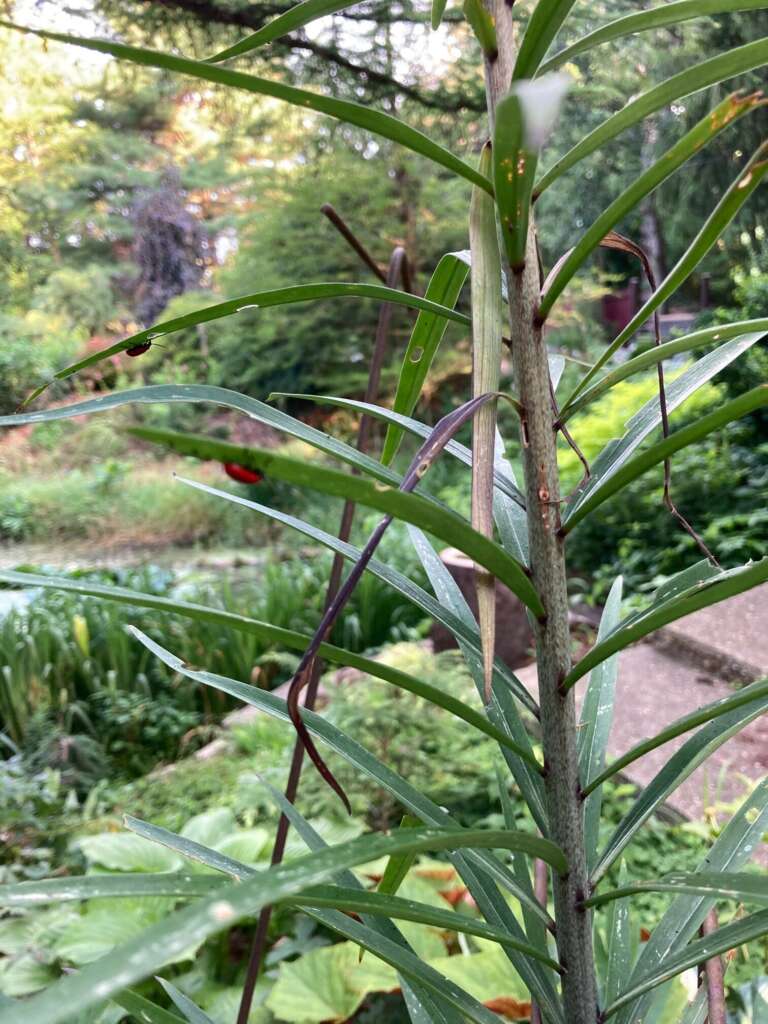
If you’re a gardener, but you haven’t yet experienced the ravages of Lily Beetles in your garden, count yourself among the lucky, but don’t get too complacent just yet. Like the Emerald Ash Borer, Lily Beetles are on the move.
I had first heard of Lily Beetles, in a warning from Marion Jarvie (a renown gardener and lecturer from Toronto Canada). That was (I believe) in the late 1990’s. It was more than a decade later, before I would come upon one in my own garden, and I squished it Pronto! Despite my vigilance, I would not see another red devil, until sometime around 2018 or so. However from then on, they were here to stay.
As I understand it, Lily Beetles arrived on the scene as it were, in Massachusetts, in the early 1990’s. It quickly became apparent that action was needed to battle this invasive pest, and the search was on for a suitable, biological control. Extensive trial studies were made, prior to the release of a predatory wasp, with very positive results. Currently, similar studies are being conducted here in Michigan.
Last year, Andrea & I (in our garden), along with Tony Reznicek (in his own garden) committed to a serious campaign of twice-daily patrols throughout our gardens, search and destroy missions really (once in the morning and again in the evening) checking every lily plant and dispatching all adults and larvi we we could. If they sense impending danger, the adults are surprisingly adept at dropping to the ground and rolling onto their backs with their black, belly-side up, making them all but invisible in the garden litter.
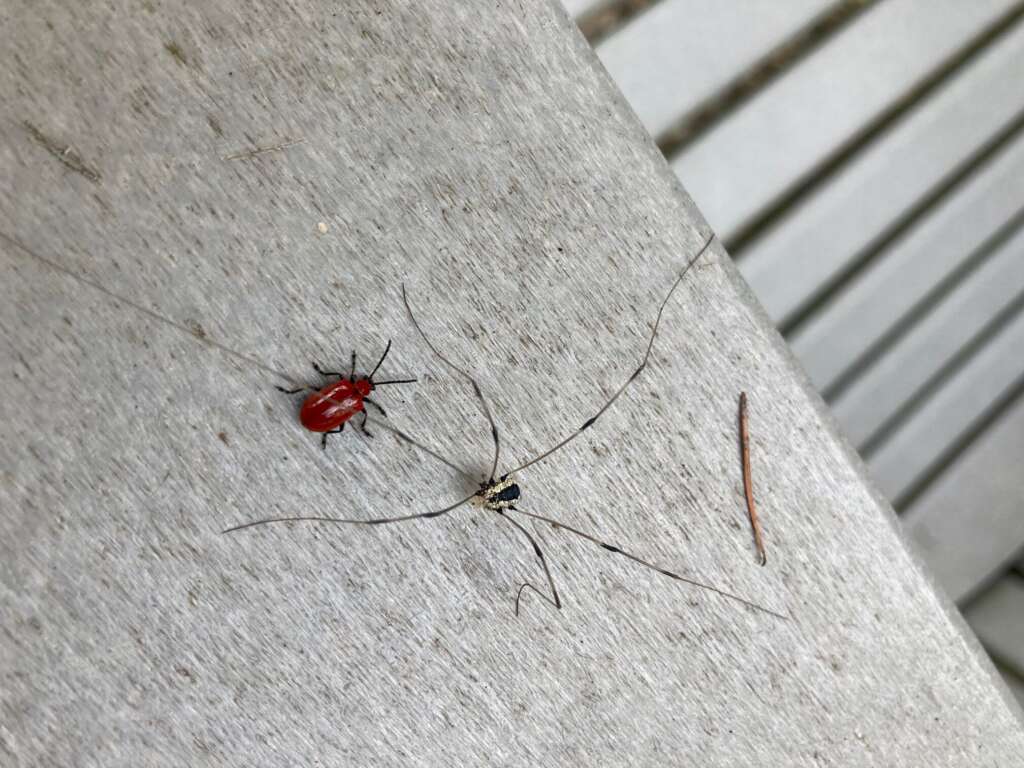
I set this one onto an arm of an Adirondack Chair for scale, next to a Daddy Longlegs.
During the middle of the day the little imps can be found resting and chewing the undersides of the leaves.
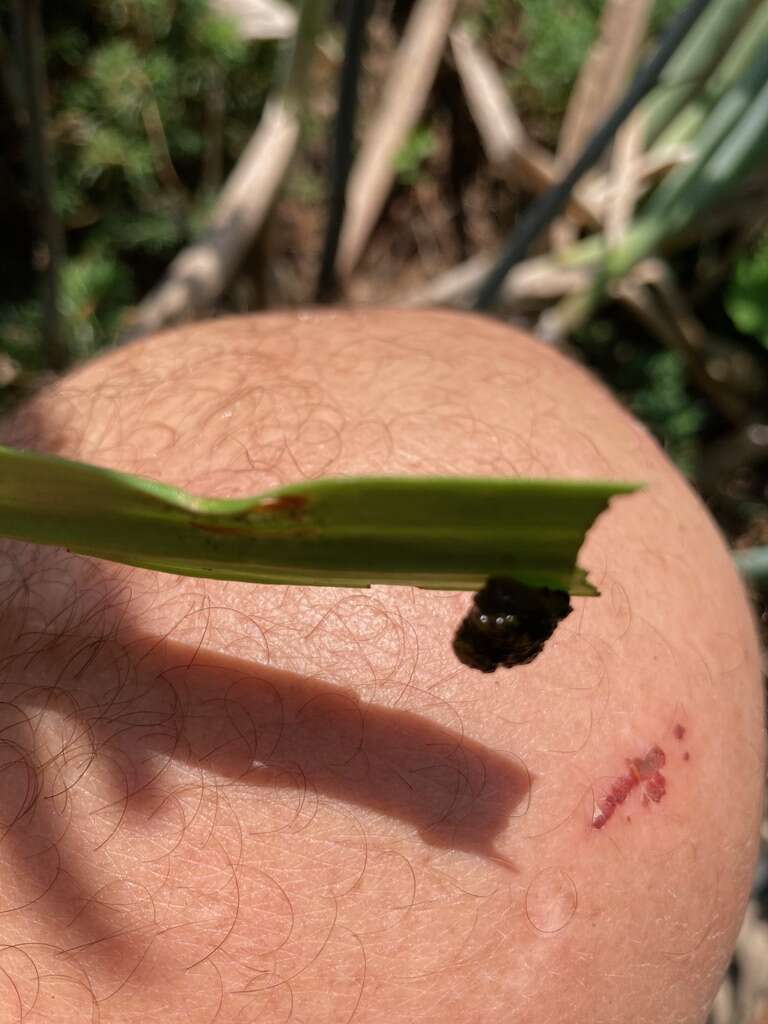
Our efforts paid off noticeably, in that there wasn’t an increase in the number of adults and larva found on our plants, however this changed the following year the following year. To me, it seems as though there is a “flush” of adults, feeding on our plants, mating, laying eggs on the undersides of the lily leaves (the eggs are red as well) and then there’s a period of roughly 10-14 days where there will be almost no (or very few) adult lily beetles. During this dearth-of-adult period, the eggs hatch and the larva begin their work, devouring the leaves, and in the case of young plants, consuming the stems as well. The growing larva have a delightful, protective-mechanism of covering themselves in their own excrement, which I suppose works on the squeamish, but I squish them anyway, right along with any and all adults I can snatch. The larva grow to a point and then drop off to the ground, to pupate in the soil (I’m told till next year).
Here’s what the schmutz-covered little buggers look like, hanging on the underside of a partially-chewed leaf.
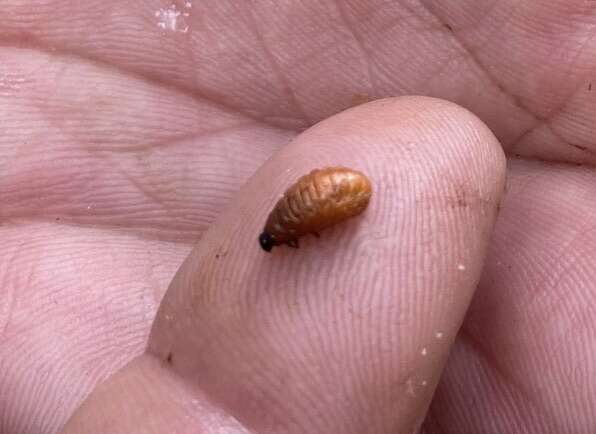
Here’s one I found right after a hard rain washed away its crap-shield.
Then, after a two week calm, there’s another flush of adult beetles, and the cycle repeats seemingly in two-week cycles, all summer long. By religiously making our twice daily patrols thru the garden (squishing all beetles & larva alike, even red eggs when I see them) the overall numbers stayed pretty consistent. I do usually miss a couple of the quicker, and perhaps more wary adults, who drop to the ground before I can snatch em.
While the Lily plants might look a little ragged (from the chewing that our pinching fingers interrupted) our plants bloomed and survived enough to replace the bulb, and the following year out plants reappeared, relatively, none the worse from the previous years foliar-damage.
The real pay-off from last years diligence, came in the fewer, overall numbers of Lily Beetles this year, that Andrea & I (as well as Tony) saw in our gardens.
Now we’re not kidding ourselves, new beetles are coming in from neighboring gardens, and until our State’s Trial Studies are completed, and the predatory wasps are released (and wasp numbers increase to sufficient numbers to be effective) we’re going to have to keep up our efforts. And while I’m not tearing out my lilies, I won’t be adding any nor replacing any lilies in the garden. It is a lot of work, but all in all, we seem to be holding our own.
That is until we went away for a long 4-day weekend!
These Maragon Lilies looked fairly unmarred when we left.
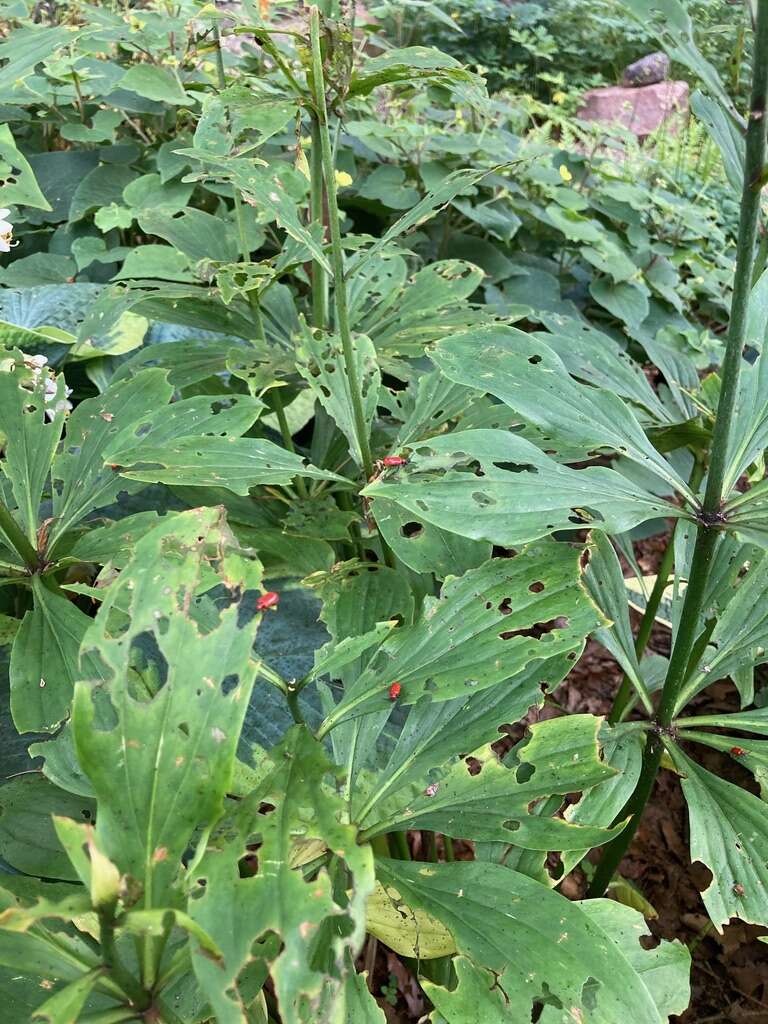
The morning after we returned home, this is what we found. In just 4 days of free rein, the Red Menace had these cherished plants in tatters. I must add that Lily Beetles are so fond of Martagon Lilies, that they’ll keep coming back even to devour the stems if left unchecked.
Tony tells me that the adult Lily Beetles only lay their eggs on lilies, and so far I’ve only found larva on lily leaves. However I have observed, adult Lily Beetles, actively feeding on the leaves of Polygonatums (they seem to find an unusually large form of Polygonatum biflorum I have in the garden especially tasty), Mianathemums, (both racemosa and stellata) but thankfully, and strangely, none of the Asian forms of either Maianthemums nor Polygonatums have been chewed!
Needless to say, that if the State is looking for volunteer test gardens (whenever they’re ready for wasp release), I say “PICK ME ! PICK ME !”
It is possible to have Lilies in your garden even with Lily Beetles, but it sure ain’t easy!